Practical upgrades in occupied homes
Deer Park has a mix of established ranches, capes and expanded family homes, where AV work often happens without a complete renovation. A new television, a home-office connection or a camera at the driveway should not automatically become a whole-house project. We begin with the specific problem and inspect the existing routes, power and network before recommending equipment.
A clean installation still requires planning. Furniture position and window glare affect a television location; an accessible basement may offer a useful cable route, while a finished lower level may restrict it. We identify where an opening is necessary and agree how that work will be coordinated. The homeowner should understand the visible result and any decoration work before installation begins, not discover a compromise when the display is already on the wall.
Network wiring that supports everyday work
In a Deer Park home with an office, streaming televisions and connected cameras, internet speed is only part of the picture. A fast service connection cannot compensate for weak wireless coverage in the room where someone works. We look at access-point placement, the condition of existing cable and opportunities to give fixed equipment a wired connection. The aim is dependable use across the occupied rooms rather than a high speed-test result beside the router.
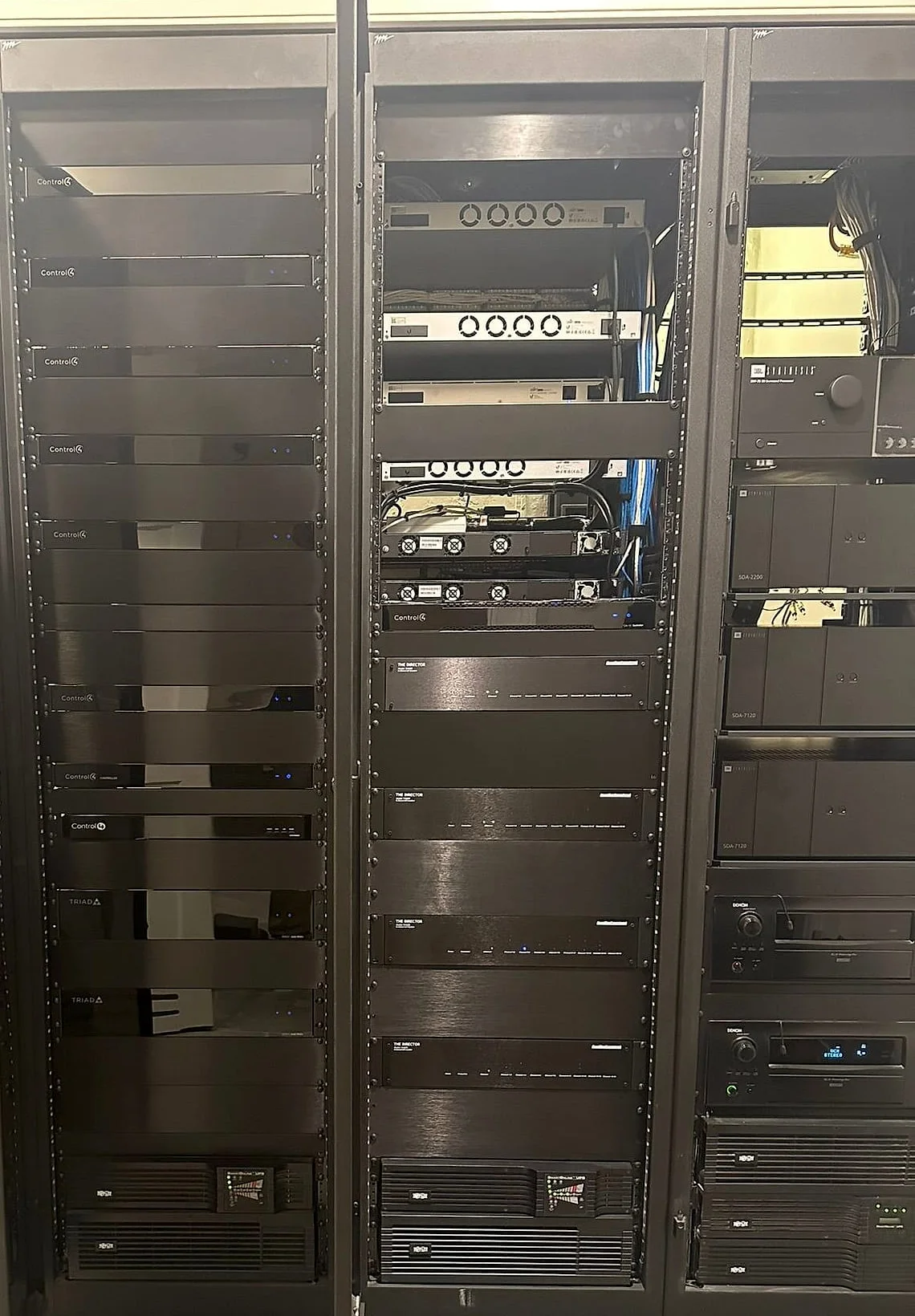
Renovation creates an opportunity to improve that foundation. We coordinate access-point, display and camera locations while walls are open, then label and test the installed runs. Equipment needs a sensible home with ventilation and enough access to replace a component. Locating everything in an inaccessible corner simply moves the clutter out of sight while making future service harder. A short record of cable destinations is valuable even for a modest installation.
Conference rooms for local offices
Deer Park's commercial and light-industrial areas include offices where a meeting room must support staff, visitors and remote participants without a dedicated AV operator. We begin with room size, seating and the way meetings are scheduled. A compact huddle room may need a different camera and microphone arrangement from a longer table in a reflective boardroom. Both need an uncomplicated way to start a call and share content.
The network and furniture details should be resolved alongside the AV equipment. A reliable wired connection, an agreed laptop connection point and accessible power make meetings easier. Table wiring should be planned with the furniture rather than left draped across the surface. We also consider room acoustics, because microphones cannot remove every problem created by hard walls and background noise. Final testing includes listening from the remote end, not just confirming that a camera image appears on the local screen.
Cameras and cabling around business operations
For a Deer Park business, camera planning may focus on entrances, parking or a loading area. The view should follow the operational need while respecting privacy and the property's boundaries. Mounting height, changing daylight and vehicle movements affect how useful a recording will be. We agree who can view recordings and administer the system rather than leaving shared access uncontrolled.
Work in an operating business also needs scheduling. We identify which connections can be interrupted, what must remain available and where access equipment or cable work could obstruct staff. Existing cabling is assessed before a reuse decision; labeling alone does not establish that a run meets its intended specification. Our New York office is in Deer Park, which makes coordination convenient, but attendance and completion times still depend on the agreed scope and access. A documented handover gives the owner or office manager clear information about the network, conference equipment and cameras instead of a collection of unexplained devices.
For homes
For businesses
Local offices and commercial buildings need conference rooms that start a call reliably, displays for lobbies or shop floors, cameras for entrances and loading areas, and structured cabling that is tested and labeled. Being local means we can respond quickly when something needs attention.