Three kinds of Miami Beach home
Most of our Miami Beach work falls into three groups. Condominium residences in the oceanfront towers along Collins Avenue and in South of Fifth, where the building controls the riser, the work hours and the facade. Single-family homes on the bayfront islands and in the neighborhoods along Pine Tree and North Bay Road, where there is a yard, a dock and an equipment room to plan. And older apartments in restored buildings, where walls are masonry and every cable route has to be found rather than assumed.
Each needs a different plan. A tower residence is mostly about the network, the displays, motorized shades against the glare and working inside the association's rules. A bayfront home adds outdoor audio, cameras, gates and network service out to the dock. An older apartment is a careful exercise in routing and surface-mount detail.
Working inside a condominium building
Condominium work starts with the association. Most buildings require a certificate of insurance naming the association and management company, an approved scope, elevator reservations for deliveries and set working hours. We prepare that paperwork early and coordinate with the building engineer so a crew is not turned away at the loading dock.
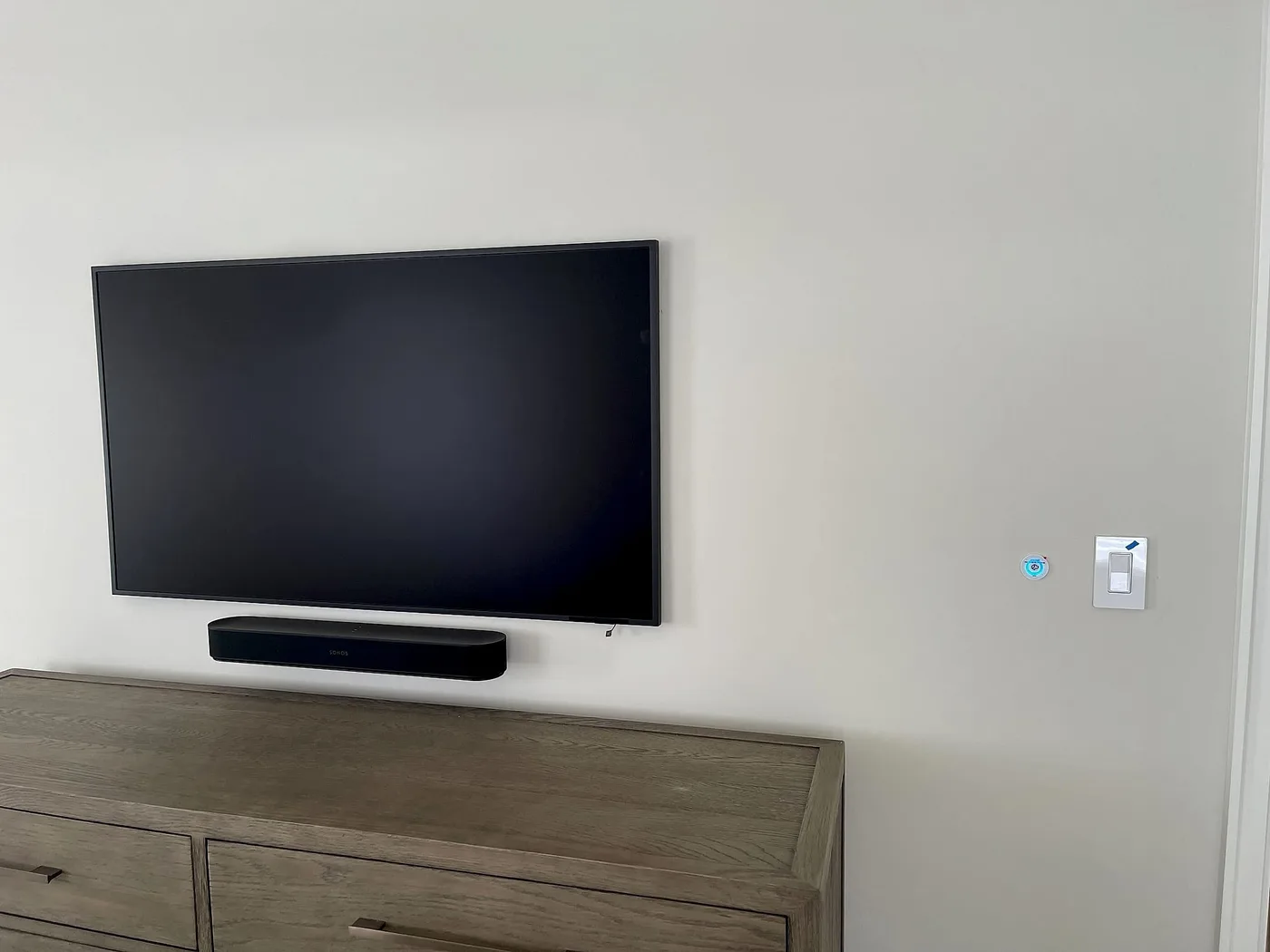
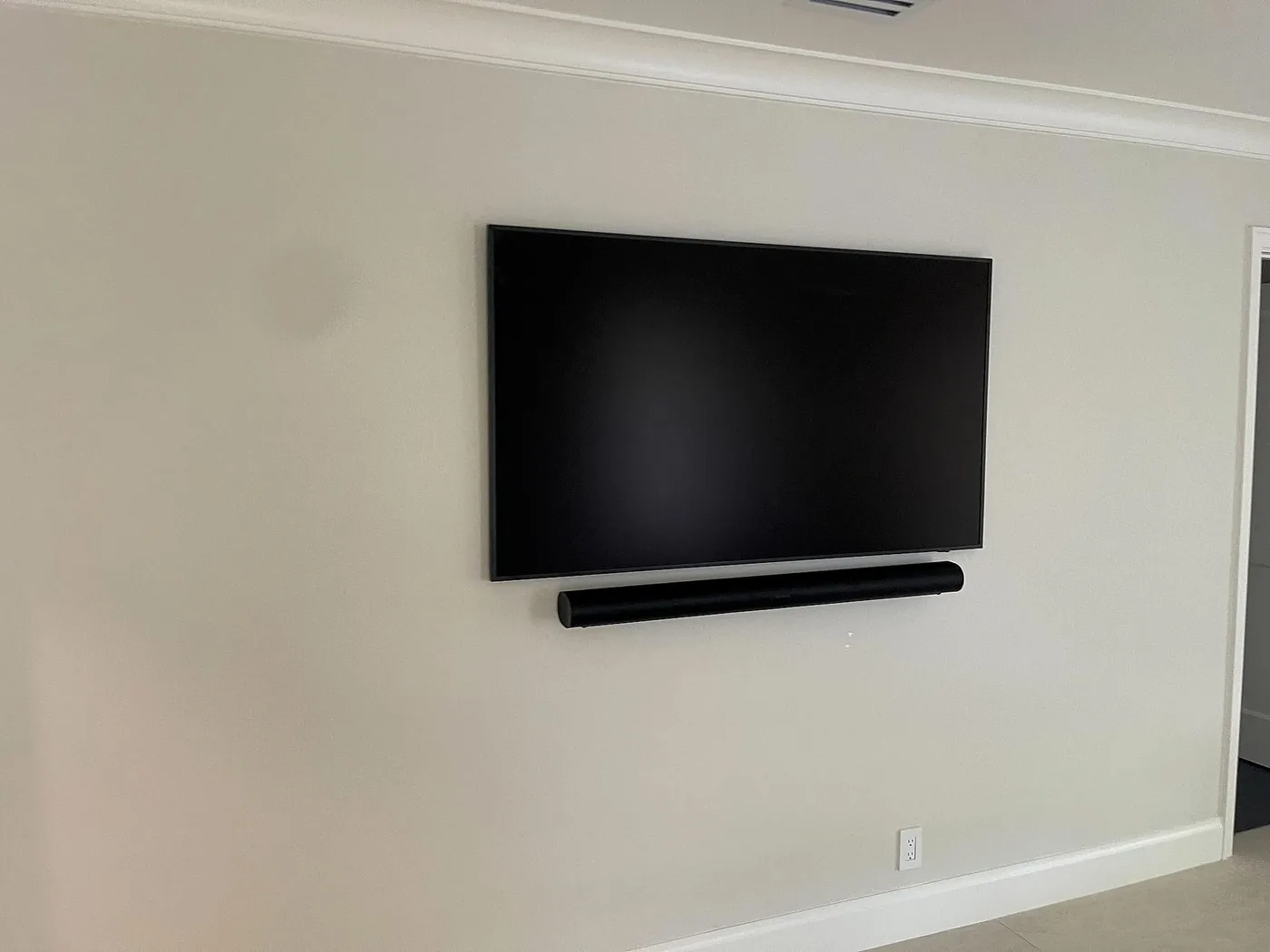
Inside the unit, we plan around what cannot be changed: concrete slabs, shared risers and fire separations. Displays are recessed or flush-mounted where the wall allows, cable runs use existing pathways where possible, and the equipment lives in a ventilated closet rather than a bedroom cabinet. Where the building provides internet to each unit, we put our own router and UniFi network behind it so the residence has coverage and control the building system does not give.
Sun, glare and the view
The view is the reason most people buy in Miami Beach, and it is also the hardest thing to live with at two in the afternoon. Motorized shades are often the first system a client asks about: solar shades that cut glare and heat while keeping the water visible, and blackout shades in bedrooms and media rooms. Shades are tied to Lutron lighting control so one keypad sets the room, and they can follow the sun on a schedule while the owner is away.
Display placement follows the light. A screen opposite a wall of glass needs a different panel, a different position or a shade scene that comes down when the TV turns on. We plan that with the designer before the wall is finished.
Salt air and outdoor living
Terraces, pool decks and docks are where Miami Beach homes are used most, and they are also where equipment fails first. Outdoor speakers and enclosures are chosen for salt air and constant sun, hardware is stainless or coated, and connections are sealed so water cannot collect. Amplifiers and streaming equipment stay inside in conditioned space.
On single-family lots, every outdoor run goes in conduit with long-radius sweeps and pull boxes, never direct-burial cable, so a speaker or camera can be serviced later. Our outdoor audio page explains how we plan those runs.
Hurricane season
Storm preparation is part of the design, not an afterthought. We coordinate surge protection with the electrician, put battery backup on the network, cameras and control processor so the house stays reachable through a short outage, and plan for systems to restart cleanly when power returns. None of this makes a home storm-proof; it is planning to reduce damage and shorten recovery. Outdoor equipment is mounted to the wind exposure of the site, and anything that should come inside before a storm is easy to remove.
For owners who leave for the summer, the same planning lets them check on the home from New York: cameras showing the terrace, a leak sensor, the temperature inside and whether the shades are down.
Cameras, entry and the building
On private homes we install UniFi Protect cameras and UniFi Access entry: 4K G6 cameras recorded locally on a UniFi NVR with no monthly fees, and intercoms and readers at the gate and front door with per-person credentials. In condominiums, cameras and entry belong to the building, so in-unit work focuses on the residence's own network, displays and control, and we coordinate with the association's systems rather than duplicate them.
Control platforms: Crestron, Lutron and Josh.ai
In a Miami Beach condominium the control system usually lives in a closet inside the unit. A Crestron processor ties together the lighting, shades, climate, audio and video, Lutron HomeWorks keypads replace banks of switches, and Josh.ai voice control can be added in kitchens, living rooms and bedrooms. On bayfront and island estates, the same platforms extend to guest houses, pool decks and docks, with more of the work going into the network and outdoor equipment.
Whichever kind of home it is, we set it up to match the owner's other properties where possible, so the touch panels and the app work the same way in Miami Beach as they do in New York.
Elsewhere in South Florida
The same South Florida team works on the mainland in Miami, north along the coast in Bal Harbour, in Fort Lauderdale and up to Palm Beach. Our marine work aboard Sanlorenzo yachts is described in the Sanlorenzo case study, and the South Florida overview explains how we plan for salt air, sun and storm season across the region.
How a Miami Beach project runs
We start with a walkthrough and the drawings, then produce a scope and CAD documentation for the association and the design team. Equipment racks are pre-built and tested before they arrive, which shortens time in the building. After installation the system is commissioned, the household is trained, and we stay on for support while the owner is away, with remote management where the system allows it. Limitless AV is licensed in Florida, and the same team handles Miami, Bal Harbour, Fort Lauderdale and Palm Beach.