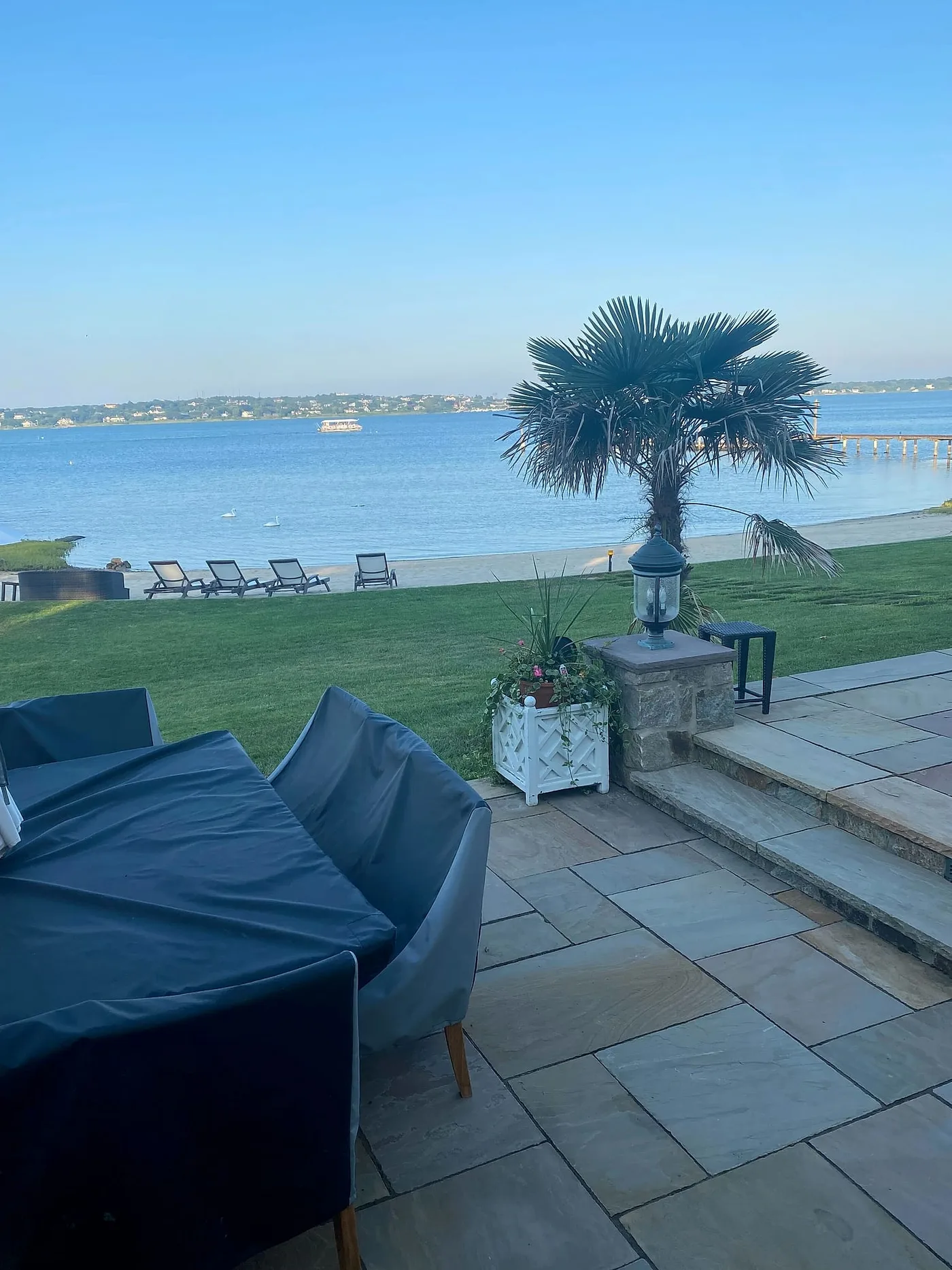
Why East End homes need a different plan
A Hamptons house is rarely just a smaller version of a primary residence. Many are lived in intensely for a few months and lightly the rest of the year. Others have become year-round homes, with families splitting time between the East End and Manhattan. Either way, technology has to handle long stretches of absence, a surge of guests in summer, outdoor living that matters as much as indoor space, and an environment of salt air, sand, humidity and winter storms.
Construction on the East End also has its own rhythm. New builds and major renovations are often scheduled around the summer season, with crews pushing to finish before Memorial Day. Approvals, local building requirements and the realities of getting trades out east all affect timing. Technology planning that starts early, alongside the architect and builder, is the best way to avoid the AV and lighting being the last unfinished items when the family arrives.
Communities across the South Fork and beyond
We work throughout Southampton, Water Mill, Bridgehampton, Sagaponack, Wainscott, East Hampton, Amagansett, Montauk and Sag Harbor, as well as Westhampton Beach, Quogue, Remsenburg, Hampton Bays and Shelter Island. The North Fork, from Riverhead through Mattituck, Cutchogue and Southold to Orient, is part of our coverage as well.
Each area has its own character. Oceanfront houses south of the highway face direct salt exposure and wind. Homes in the woods north of the highway in East Hampton and Southampton deal with longer driveways, gate entries and spotty cellular service. Sag Harbor's historic village homes call for discreet solutions and careful work in older structures. Montauk properties are often more exposed and more casual. Our broader Long Island page covers the rest of Suffolk and Nassau.
Typical project considerations for Hamptons homes
These are general planning considerations we discuss with East End homeowners, architects and builders. They are not descriptions of specific properties, but they reflect the conditions that come up most often out east.
- Seasonal occupancy: remote monitoring, arrival and departure scenes, and systems that recover cleanly after power interruptions while the house is empty.
- Salt air and weather: marine-grade outdoor speakers, corrosion-resistant hardware and weatherproof connections for terraces, pools and docks.
- Landscape coordination: outdoor audio, lighting and cameras planned with the landscape designer before beds are planted and hardscape is laid.
- Large glass: motorized shades for glare, heat and privacy in open plans with ocean, bay or field views.
- Long driveways and gates: power, network and conduit for gate intercoms and cameras planned early, often hundreds of feet from the house.
- Pool houses and guest cottages: network, audio and control extended between buildings so guests have the same experience as the main house.
- Connectivity: internet options vary by location, so network design accounts for service availability and, where useful, backup connections.
Outdoor living comes first
On the East End, the pool deck, terrace and lawn are often the most used spaces in summer. Good outdoor audio uses many small speakers at moderate volume rather than a few loud ones, so music is even across the yard without carrying to neighbors. Coastal-rated equipment and careful placement among plantings keep it discreet and durable.
Outdoor WiFi, landscape lighting, outdoor televisions and covered-porch shades complete the picture. Strong home network and WiFi coverage out to the pool and pool house is essential for streaming, cameras and guests' devices.
The core systems inside the house
Inside, most Hamptons homes benefit from Lutron HomeWorks lighting control and motorized shades, especially where large windows face water or open fields. A Crestron home automation system ties lighting, shades, climate, audio and security together and makes remote management practical. Whole-home audio carries music from the kitchen to the terrace, and many families add a media room or dedicated home theater for rainy days and late nights.
For homes that sit empty part of the year, security cameras, intercoms and smart locks let owners see who is at the gate, give temporary access to landscapers or pool service, and keep an eye on the property from the city. Boat owners in Sag Harbor and Montauk may also want to explore marine and yacht AV.
Seasonal service and readiness
Seasonal homes benefit from a routine. Before the summer, systems can be checked, updates applied, outdoor equipment inspected and the network verified so everything works when the family and guests arrive. After the season, outdoor televisions may be covered or stored and the house set to an away mode. Our team offers seasonal startup and shutdown service so these steps are not left to chance.
Remote access to the network and control system helps between visits. Many adjustments, such as changing a schedule, updating an access code or checking a camera, can be handled without a trip out east. When a visit is needed, documentation of every system makes service efficient.
Getting started on an East End project
If you are building or renovating, the ideal time to talk is during design, when equipment rooms, cable paths, shade pockets and outdoor conduit can be planned. If the house is finished, a walkthrough helps identify upgrades such as better WiFi, motorized shades for glare, outdoor audio or a modernized control system. Have drawings, landscape plans and a list of current frustrations ready, along with contacts for your builder, architect and designer.
Our Long Island team covers the entire East End. We are a Crestron and Lutron dealer and programmer, and the same local team designs, installs, programs and supports each system.
Lighting, shading and the East End light
The quality of light on the East End is part of why people build there, and technology should respect it. Large windows and skylights bring in beautiful daylight but also glare, heat and fading. Automated shades that follow the sun's position protect interiors without closing off the view, and lighting scenes that shift through the evening keep rooms feeling natural as daylight fades.
Exterior lighting needs particular care. Many East End communities value dark skies and low-key exteriors, and gentle path and landscape lighting on schedules that dim late at night respects both the neighbors and the setting.
Coordinating with East End project teams
Many East End projects involve architects, designers and trades based on western Long Island or in Manhattan. Clear drawings, shared schedules and a single point of contact for technology make coordination easier when everyone cannot be on site at once. We keep documentation current through construction so changes in the field are reflected in the plan, which matters when schedules are compressed ahead of summer.
We also plan around access. Gated communities, long private lanes and limited parking can affect delivery and work schedules, so we coordinate with the builder and property manager before installation days.
Guests, rentals and house staff
Hamptons homes often host weekend guests, extended family or seasonal renters, and many rely on caretakers, property managers or house staff. Technology should be easy for all of them. We design simple guest interfaces, labeled keypads and limited-access codes so visitors can enjoy music, television and lighting without a tutorial, while owners keep control of security, climate and settings.
For properties that are rented for part of the summer, separate guest networks, temporary access credentials and the ability to reset systems remotely between stays help protect the home and keep the experience consistent for each new arrival.