What we install
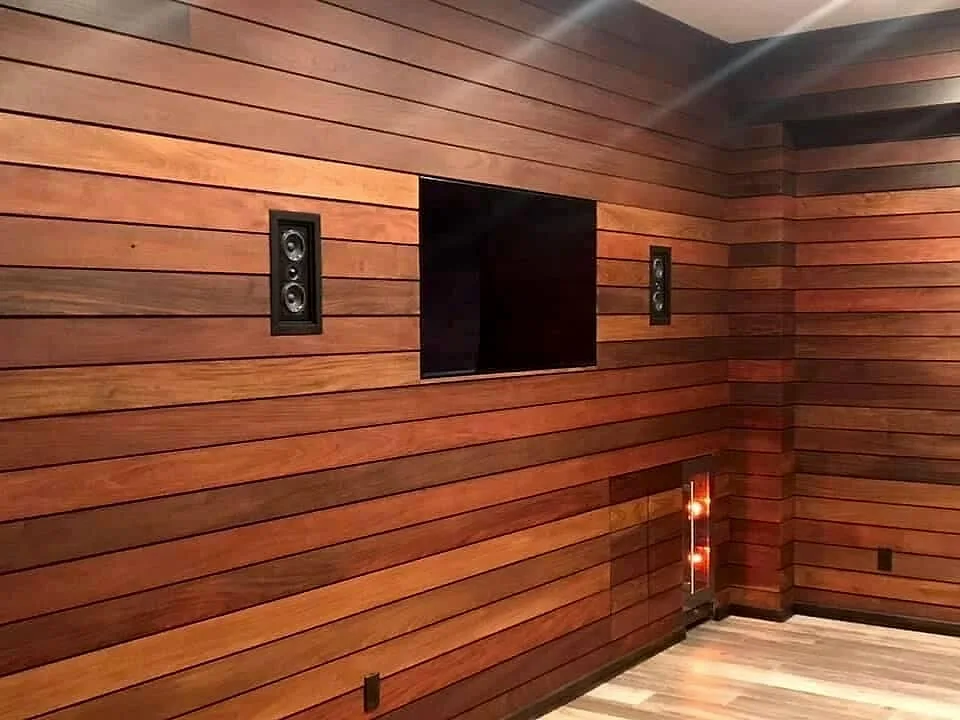
We use Sonos amplifiers to drive in-ceiling, in-wall and outdoor architectural speakers, along with Sonos players and soundbars where they suit a room. Equipment is centralized in a ventilated rack when possible, and every unit is connected to a network designed to keep streaming stable.
Where it fits
Sonos is a strong choice for households that want a familiar app, for secondary homes, and for rooms such as gyms, offices and pool houses. It can run on its own or alongside a Crestron system. Most Sonos complaints come from WiFi, which is why we pair it with a properly designed home network.
See whole-home audio and outdoor audio.
Making Sonos feel professional
Most people know Sonos as a speaker on a shelf. In a professionally installed system, Sonos amplifiers sit in an equipment rack and drive architectural speakers hidden in ceilings and walls, so the household keeps the familiar app while the rooms stay clean. Each room or group of rooms becomes a zone that can play its own music or join the others.
The difference between a frustrating Sonos system and a reliable one is almost always the network. We wire amplifiers and players wherever we can, place WiFi access points properly, and keep the audio equipment on a well-managed network.
Planning zones and speakers
We plan zones by how the house is used: a kitchen and family room that often play together, a primary suite that needs its own volume, an outdoor area that may be loud at a party and quiet at night. Speakers are chosen per room, and outdoor speakers are rated for the location.
- Group rooms that are usually played together into one zone.
- Use architectural speakers such as Sonance for a clean ceiling.
- Locate amplifiers in a ventilated rack with service access.
- Wire the network properly; see home network and WiFi.
Sonos inside a larger system
Sonos can run on its own, or it can be one source inside a Crestron system so keypads and touch panels control music alongside lights and shades. Secondary homes, pool houses, gyms and offices are often good candidates for a simple Sonos setup. See whole-home audio for how we plan larger systems and outdoor audio for gardens and terraces.
Keeping Sonos reliable
Most service calls on Sonos systems come back to the same few causes: weak WiFi, devices that dropped off the network after a router change, or players placed where they overheat. We address these in the design by wiring amplifiers where possible, placing them in a ventilated rack and keeping the audio equipment on a stable, well-documented network. When the internet provider or router changes, we can update the network without the household having to reconnect every room. Software updates are applied on a schedule, and we keep a record of zones and speaker assignments so the system can be rebuilt quickly if equipment is replaced. For households that later want keypads, a theater or whole-home control, Sonos can be integrated with a Crestron system so music is started from the same interface as the lights and shades, while the Sonos app keeps working for everyone who prefers it.